
When growth outruns delivery capacity
Energy & Power · Execution Risk Radar · June 2026
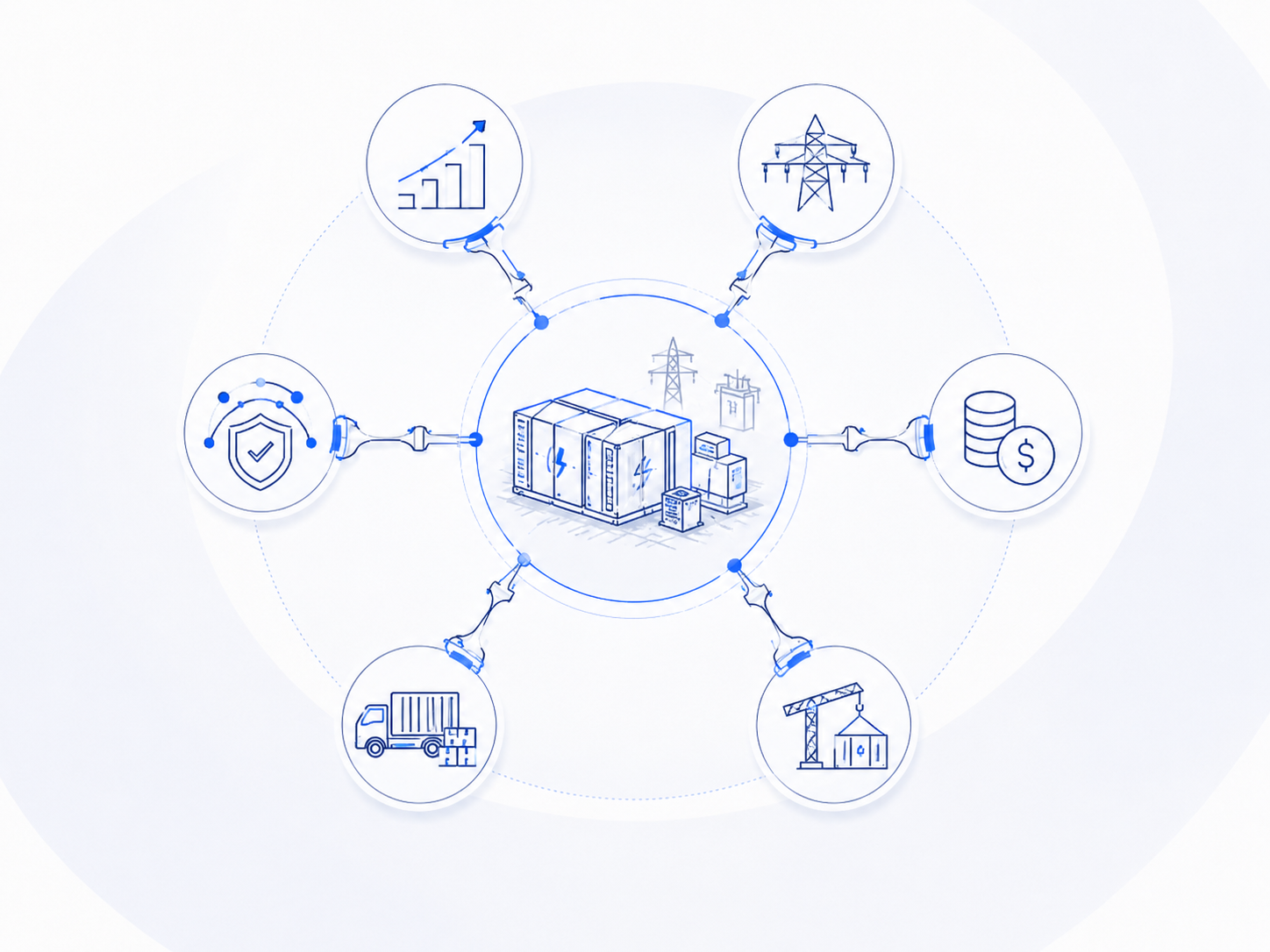
The market can be right about the theme and still miss where execution strain is building.
SignalScope View
High-growth infrastructure themes often look strongest just before delivery risk becomes visible.
The market focuses on whether the theme is right: energy storage, grid flexibility, electrification, AI power demand, renewable integration. Those themes are real. Capital is moving toward them. Strategic value is building around them.
But demand is not the same as deliverability.
The sharper question is not whether energy storage and grid flexibility are needed. They are. The sharper question is which operators can convert that demand into reliable delivery, financial resilience and operational control.
That is where execution risk starts to matter.
The growth story is easy to believe
Energy storage is becoming critical infrastructure.
Power systems need flexibility. Renewables need balancing. Data centres need reliable electricity. Electrification increases pressure on grids. Governments and infrastructure investors want assets that support resilience, decarbonisation and security of supply.
Recent public signals point in the same direction:
NextEnergy Solar Fund signalled a strategic shift toward storage and flexibility, moving away from a pure solar-income identity as power-market economics and grid needs evolve.
Jupiter Power secured a $500m credit facility to accelerate U.S. battery-storage deployment, reinforcing that storage is increasingly being financed like infrastructure.
Siemens Energy committed $1bn to expand U.S. grid and manufacturing capacity, including high-voltage switchgear and turbine production, as electrification and AI data-centre demand increase pressure on power systems.
esVolta closed an expanded $450m facility to scale utility battery-storage projects, another sign that private credit is backing grid-flexibility assets.
These are not marginal signals. They show capital moving toward the infrastructure required to support a more power-constrained economy.
So the consensus is understandable: energy storage and grid flexibility matter.
But that is not the whole investment question.
What may be missed
Growth markets can hide weak execution.
A sector can attract capital and still contain fragile operators. A company can sit inside the right theme and still struggle to deliver. A project pipeline can look impressive while installation capacity, supply-chain resilience, customer service, governance or working capital begin to strain.
Execution risk rarely appears as one dramatic warning.
It usually builds through fragments.
A delayed installation. A supplier issue. A customer-service backlog. A warranty problem. A refinancing need. A dependence on partners. A shift in management language. A filing delay. A leadership change. A move from confident growth messaging to more cautious operational language.
Individually, these signals can look small.
Together, they can show that growth is outrunning control.
That is the value of an Execution Risk Radar. It does not ask whether the theme is attractive. It asks whether public signals suggest delivery strain is building underneath the theme.
Why it matters
For investors and strategy teams, this distinction is important.
The market often rewards exposure to the theme first. But as a sector matures, the edge moves from exposure to execution.
Who can deliver projects on time?
Who has secure supplier relationships?
Who controls installation quality?
Who can support customers after deployment?
Who can fund growth without stretching the balance sheet?
Who has systems strong enough to scale?
Those questions become more important as capital floods into the sector.
The winners may not be the companies with the largest announced pipeline or the strongest growth language. They may be the operators with the most disciplined delivery systems, resilient financing structures and credible operational control.
The exposed companies may be those whose demand story remains intact while execution quality deteriorates underneath.
That is what makes this a SignalScope issue.
The market may see the growth. It may not see the strain.
What to watch next
The most useful signals are often operational, not headline-grabbing.
Watch for installation delays, service complaints, warranty pressure, supplier concentration, partner dependence, working-capital stress, refinancing activity, delayed filings, leadership changes and shifts in tone around delivery.
Also watch where capital becomes more selective. Infrastructure-style credit can validate a sector, but it can also raise the bar. As lenders and strategic investors become more disciplined, weaker operators may find it harder to fund growth on attractive terms.
The key question is no longer simply:
Is this a structural growth market?
It is:
Which operators can deliver into growth without losing control?
Energy storage may be a powerful theme. Grid flexibility may be essential. Power demand may keep rising.
But the companies that benefit most will be those that turn demand into dependable execution.
High-growth sectors do not usually disappoint because the theme is wrong. They disappoint when growth outruns delivery capacity.