
When capital moves before the narrative changes
Capital & Strategy · Strategic Signals Briefing · June 2026
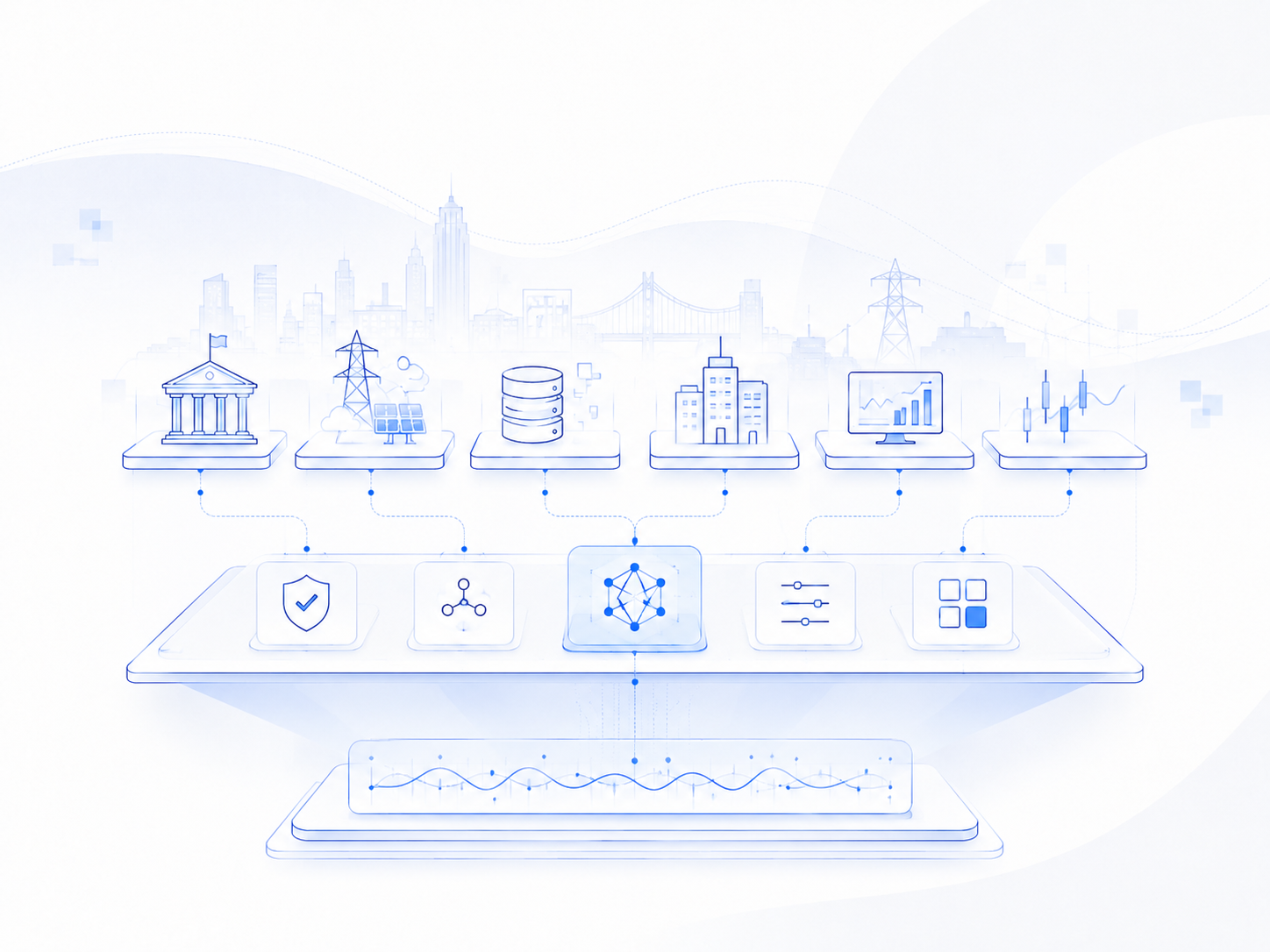
Public markets often wait for the story to change. Strategic capital often moves earlier.
SignalScope View
Market narratives usually change slowly.
Capital does not always wait.
Funding rounds, credit facilities, acquisitions, site selection, infrastructure expansion and strategic investments can all reveal where companies and investors are positioning before the consensus language catches up.
That is why capital movement matters.
A single deal may not say much. But when private credit, M&A, public-market filings and capacity expansion begin pointing in the same direction, they can reveal a structural shift before it becomes an obvious market story.
The edge is not just seeing where money is going.
It is understanding what that movement says about future control, capacity and strategic advantage.
The headline story is not always the signal
Most market commentary focuses on the visible narrative: AI demand, energy transition, manufacturing reshoring, fintech growth, defence spending, enterprise automation.
Those narratives matter. But they can become crowded quickly.
By the time a theme is widely discussed, the more useful signal may already have moved elsewhere: who is funding the infrastructure behind it, who is acquiring the control points, who is expanding capacity, and who is preparing for the next stage of scrutiny.
Capital often moves from theme to machinery.
That shift is important.
It shows when an idea is becoming investable infrastructure, not just a story.
Recent public signals
In recent months, several public signals have pointed to capital moving ahead of narrative change:
Applied Digital secured a $550m facility to fund AI data-centre development. The signal is not only AI demand. It is that lenders are underwriting data-centre capacity as strategic infrastructure, making access to debt a competitive lever alongside chips, power and anchor tenants.
esVolta closed an expanded $450m credit facility for utility-scale battery storage. Storage is being financed less like speculative clean-tech and more like grid-flexibility infrastructure linked to AI load growth, renewable penetration and reliability pressure.
OpenAI confidentially filed for a potential IPO. The signal is not just listing timing. It is the migration of frontier AI from private mega-rounds toward public-market scrutiny, where investors will demand clearer visibility on revenue, losses, infrastructure commitments, customer concentration and governance.
Ecolab moved to acquire CoolIT Systems for $4.75bn. This points to strategic capital moving toward enabling layers behind AI infrastructure. Cooling is no longer a technical footnote; it is becoming a control point in the data-centre build-out.
Accenture acquired Faculty, while Permira invested in Carne Group. These are different markets, but the pattern is similar: capital moving toward operating layers that help institutions deploy, govern or manage complexity. AI capability, governance and compliance are becoming scalable infrastructure businesses.
None of these signals is identical.
That is the point.
They sit across AI, energy, infrastructure, governance, software and private markets. But together they suggest capital is concentrating around the layers that make growth executable.
What may be missed
The market often notices the theme before it notices the enabling structure.
AI is not just a software story. It requires chips, power, data centres, cooling, security, data governance, deployment partners and financing.
Energy transition is not just a renewables story. It requires storage, grid flexibility, permitting, equipment, credit appetite and operational delivery.
Private markets growth is not just an asset-gathering story. It requires fund services, governance, reporting, regulatory infrastructure and operating controls.
The pattern is transferable.
When a market becomes more complex, capital starts moving toward the companies that reduce that complexity or control a scarce layer within it.
That is often where the next advantage begins to form.
Why it matters
For investors and strategy teams, the question is no longer simply:
Which theme is growing?
It is:
Where is capital moving before the market fully explains why?
That question can reveal early signs of strategic repositioning.
It can show where a growth story is becoming infrastructure. It can show where cost centres are turning into control points. It can show where financial backing is validating long-duration demand. It can also show where public markets may soon test assumptions that private capital has been carrying.
The strongest signal is rarely one transaction.
It is convergence.
When funding, M&A, capacity expansion and regulatory pressure start pointing to the same place, the market may be preparing to reprice the story.
What to watch next
Watch where private credit replaces equity as the preferred scaling tool. Watch where strategic buyers acquire technical bottlenecks. Watch where public-market filings force greater transparency. Watch where governance, compliance or deployment capability attracts capital. Watch where companies move from announcing demand to securing the physical, financial or operating capacity required to meet it.
The most useful signals may not be loud.
They may be buried in financing terms, acquisition logic, site selection, infrastructure commitments or specialist capability deals.
Public information is rarely hidden.
The advantage comes from seeing when scattered capital movements start to tell the same strategic story.